

Running a company in New Zealand is different from being a sole trader. Different structure, different tax rules, different obligations. Get your head around the basics early and you will save yourself a lot of stress – and money – down the track.
This guide covers the four things every NZ company owner needs to understand: what it actually means to be a limited liability company, how company tax works, what you can deduct, and how to pay yourself correctly.
What does it mean to be a limited liability company?
When you incorporate, your company becomes its own legal entity. It has its own IRD number, its own bank account, and its own obligations. That separation is the whole point.
As a sole trader, your personal assets – your savings, your home – are on the line if the business cannot pay its debts. As a company director, your liability is generally limited to what you have put into the business.
That is the core benefit. But there are others…
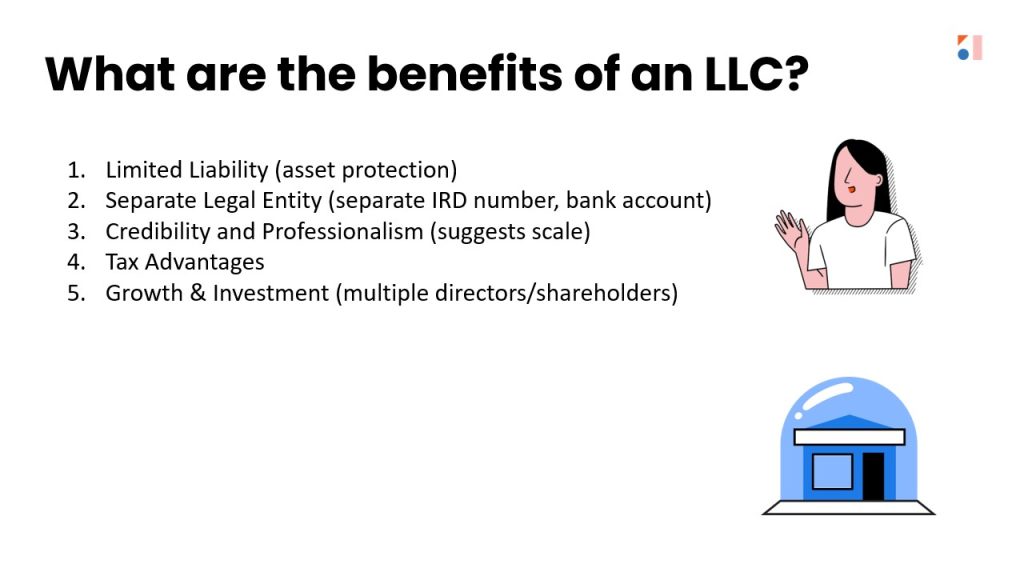
A company also signals credibility to customers, suppliers and banks. And keeping a clean separation between business and personal finances makes tax time significantly easier.
The trade-off is compliance. As a director you have real obligations – filing an annual return with the Companies Office, maintaining accurate records, and meeting all IRD requirements. These are not optional.
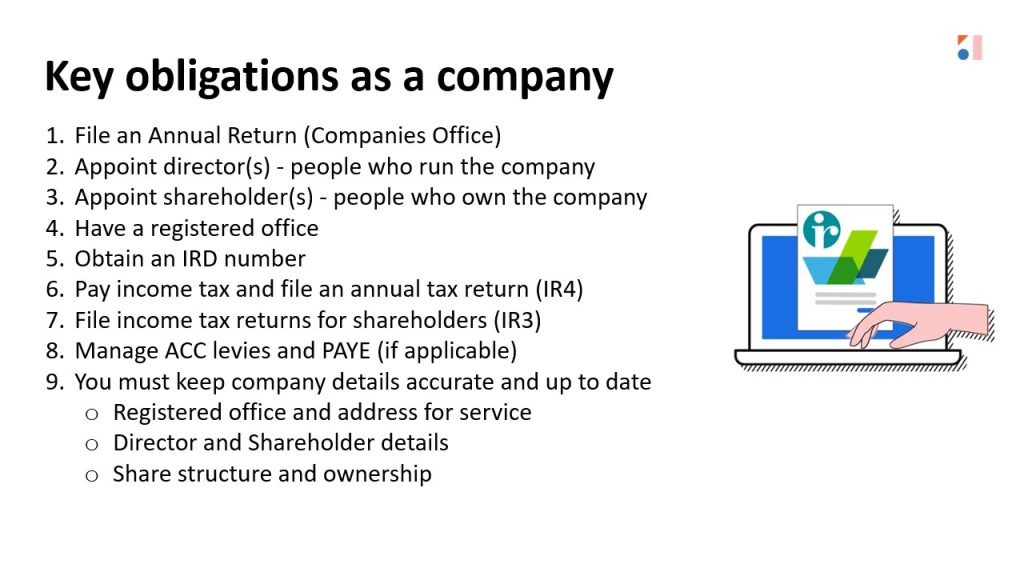
The list looks long at first. But with the right systems in place, most of it becomes routine quickly.
How company tax works
New Zealand companies pay 28% tax on net profit. Not on revenue – on profit. That distinction matters.
If your company earns $200,000 but spends $120,000 running the business, you pay tax on $80,000. Every dollar you legitimately claim as a deduction reduces your taxable profit – and therefore your tax bill.
Each year your company files an IR4 tax return with Inland Revenue. If you also pay yourself a salary through the company, you will file a personal IR3 return as well.
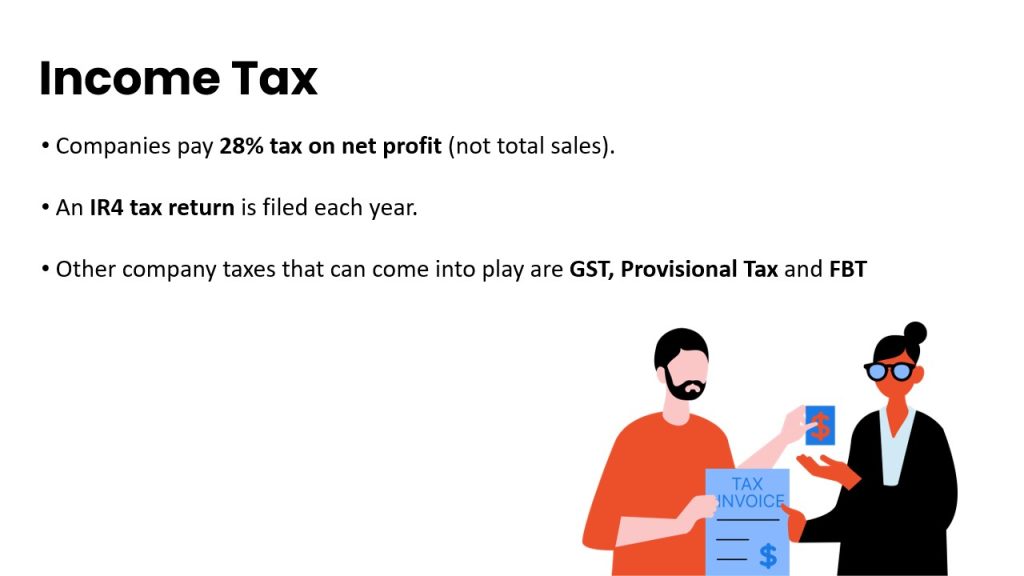
Three other taxes may also apply depending on your situation:
GST kicks in once your revenue hits $60,000 per year. At that point registration becomes compulsory. You collect 15% GST from customers on behalf of the government, and you can claim back GST on business expenses.
Provisional Tax is how the IRD collects your income tax throughout the year rather than as one lump sum at the end. Once you owe more than $5,000 in residual income tax, you are required to pay in instalments. Getting this wrong – underestimating or missing a payment – can result in use-of-money interest. Plan for it.
FBT (Fringe Benefit Tax) applies if your company provides non-cash benefits to employees – such as a company vehicle used for personal trips.
What can you deduct?
There are three main ways to reduce your taxable profit. It’s a good idea to use all three. They are Expenses, Allowances and Asset depreciation.
1. Expenses
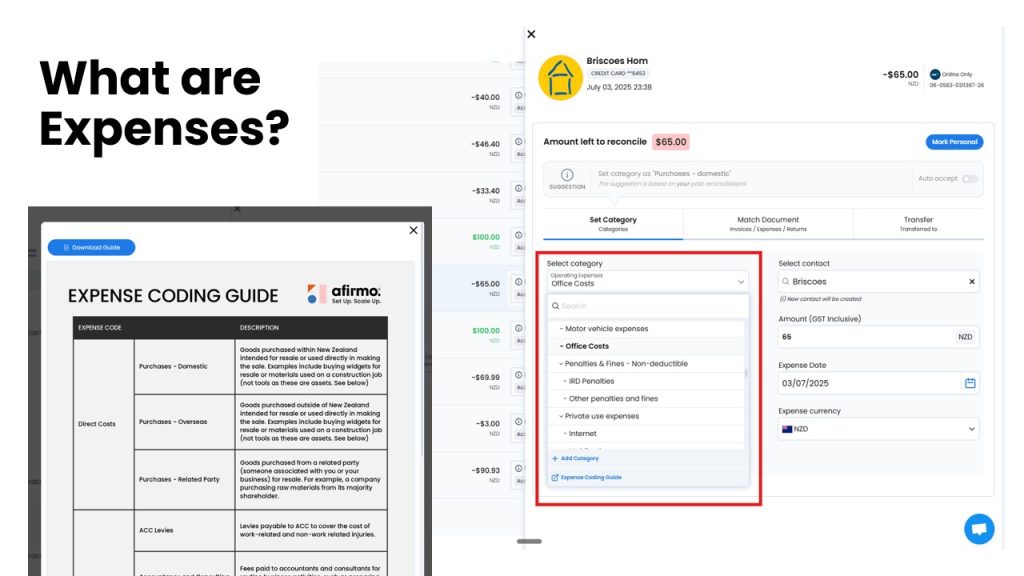
Expenses are the costs your business incurs to earn income. Rent, software subscriptions, professional fees, marketing, supplies – if it was spent in the course of running the business, it is generally deductible. The key test IRD applies is whether the expense was incurred to produce taxable income.
The practical tip: categorise your expenses throughout the year, not in a panic at year end. It makes a real difference.
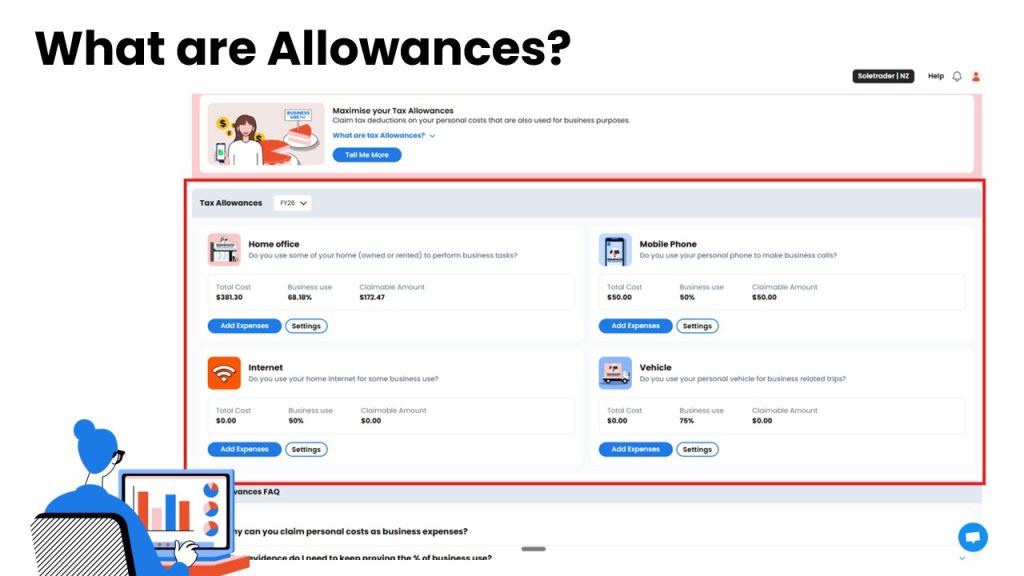
2. Allowances
Allowances cover personal costs that are also used for business. The most common ones are your home office, mobile phone, home internet and personal vehicle.
You can claim the business-use percentage of each. If you use your phone 50% for work, you can claim 50% of your phone bill. Keep records of your usage so you can back up your claims if IRD ever asks.
3. Asset depreciation
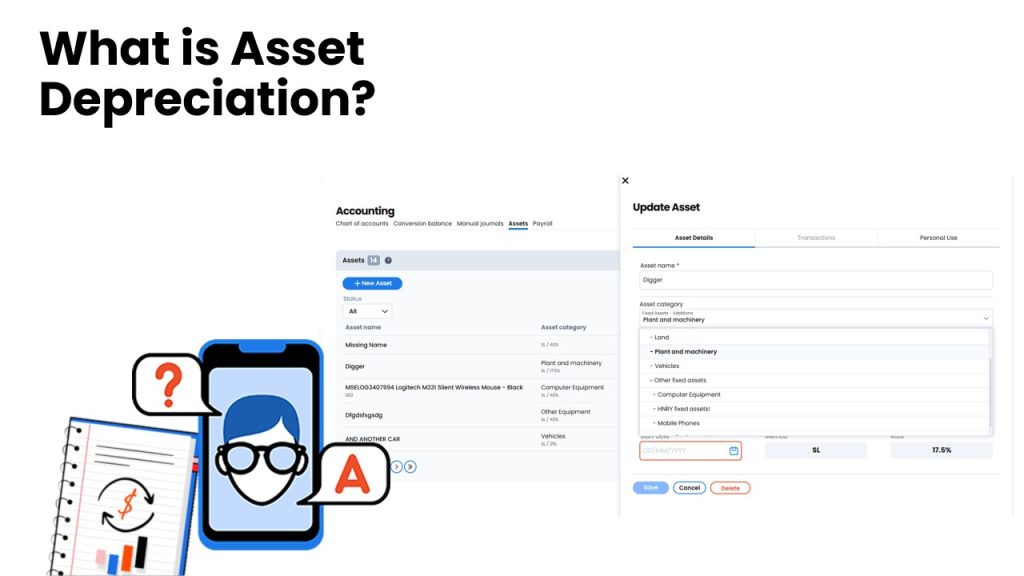
When your business buys a significant asset – equipment, a vehicle, a computer – you generally cannot write off the full cost in the year of purchase. Instead you claim the loss in value of that asset over time. IRD sets the depreciation rates for each asset category.
Tracking your assets correctly reduces your taxable profit each year and keeps your accounts accurate.
How to pay yourself
This is where a lot of new company owners get unstuck. Because your company is a separate legal entity, you cannot simply transfer money to your personal account and call it income. There are four legitimate ways to take money out – and each has different tax implications.
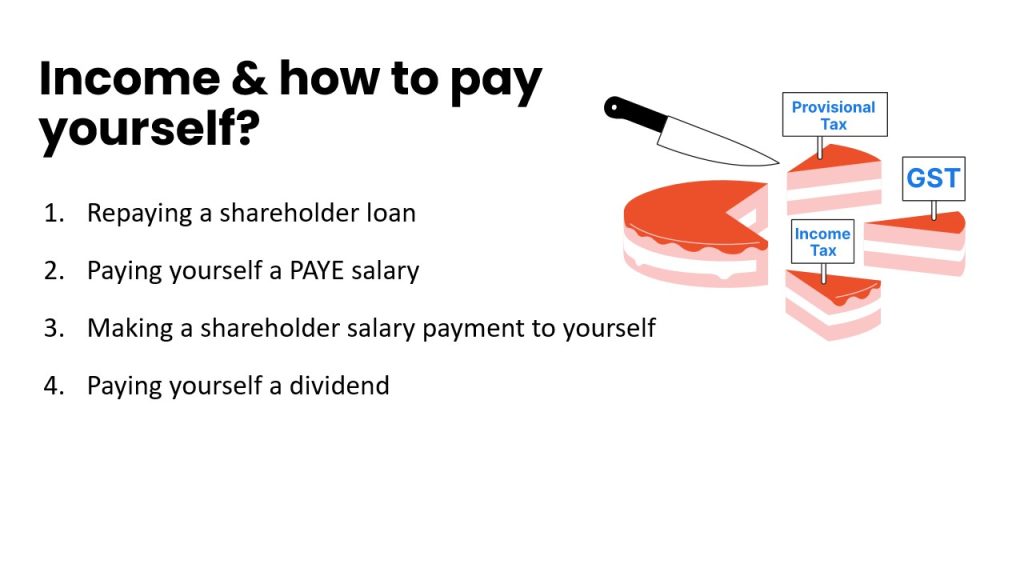
1. Repaying a shareholder loan
If you put your own money into the business at the start – to cover early expenses, equipment or working capital – that is recorded as a shareholder loan. The company owes it back to you. Repaying that loan is not income and is not taxable. You are simply getting your own money back.
This is often the first way new company owners take money out of the business.
2. Paying yourself a PAYE salary
You can employ yourself through your own company and pay yourself a regular salary, just like any other employee. The company deducts PAYE tax each pay period and pays it to IRD on your behalf.
The upside: stable income, tidy personal tax, and banks like seeing consistent salaried earnings when you apply for a mortgage or loan.
The downside: less flexibility. Once payroll is set up you need to run it consistently – you cannot switch it off if business slows down.
3. Shareholder salary payment
Rather than paying yourself monthly, you declare a salary at year end based on what the company actually earned. This gives you flexibility to adjust the amount to match how the year went – and money can stay in the business until you need it.
The catch: no tax is deducted throughout the year, so you need to estimate your income and set aside provisional tax at regular intervals. Underestimate and you could face use-of-money interest from IRD.
4. Paying yourself a dividend
A dividend distributes company profit to shareholders. Unlike salaries, dividends do not reduce the company’s taxable profit – the company pays its 28% tax first, then distributes what is left. That makes dividends less tax-efficient than salaries for most owner-operators.
There are also legal obligations. Directors must sign a solvency statement confirming the company can meet its debts after the distribution. If the company later goes into liquidation, shareholders may have to repay dividends received. Imputation credits – representing tax the company has already paid – can be attached to dividends to prevent double taxation.
Getting these fundamentals right early puts your business in a much stronger position – financially and legally. If you want to talk through your specific situation, the Afirmo team offers free 1-on-1 calls where you can get answers tailored to your business.