

When you start earning self-employed income in New Zealand, the tax side of things can feel overwhelming fast.
This guide cuts through the noise and covers what you actually need to know: how business structures work, what taxes apply to you, how to reduce your tax bill, and what dates to keep on your radar.
Sole trader or company – which one are you?
When you start a business in New Zealand, one of the first decisions you will face is whether to operate as a sole trader or set up a limited liability company. Four questions can help you shape that decision.
Do you plan to hire staff or contractors? Do you want to bring on a business partner? What do other businesses in your industry typically do? And do you plan to sell the business one day?
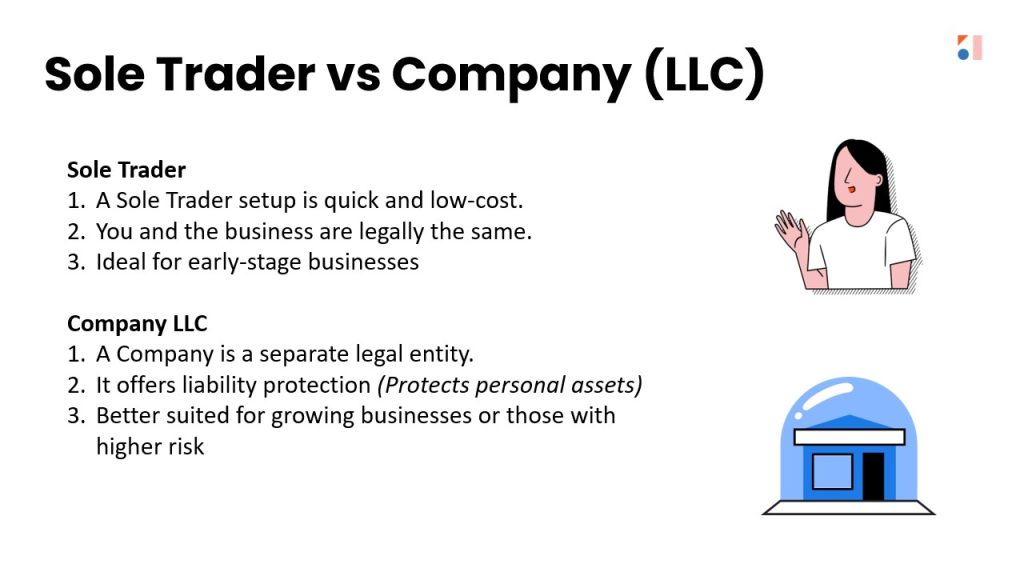
Sole trader
Sole trader is the fastest, simplest and most common structure. You become a sole trader the moment you start earning self-employed income. There is no formal registration – you use your own IRD number and operate under your name or a trading name you choose. It is cheaper to start, gives you complete control, and is ideal for solo operators.
The trade-off is risk. As a sole trader, you and the business are the same legal entity. If the business runs up debts or faces legal action, your personal assets – savings, property, everything – are on the line.
Limited liability company
A limited liability company separates you from the business. The company becomes its own legal entity.
You and any other shareholders are protected – your personal assets are generally not at risk if the business gets into trouble. That protection is the whole point of the structure, and it becomes more important as a business grows, takes on staff, or carries more financial risk.
What changes when you become self-employed
Whether you are a sole trader or a company director, going self-employed means taking on responsibilities that an employer used to handle for you.
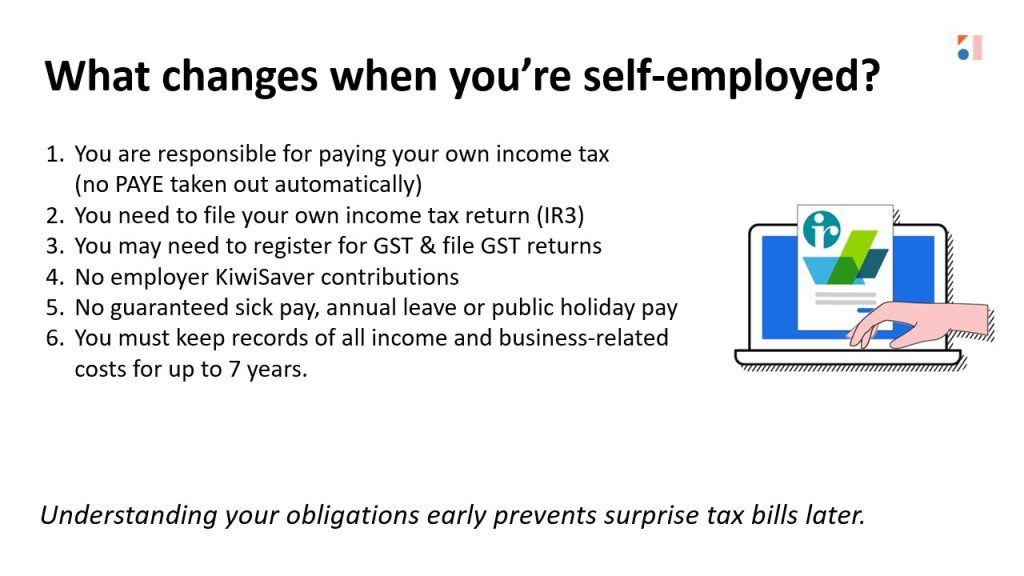
You are now responsible for paying your own income tax. Your clients pay you the full amount – no PAYE is deducted at source. It is up to you to set money aside throughout the year and meet IRD payment dates.
You must file an IR3 Individual Tax Return every year. This covers all your income – not just self-employment income – and lets you claim valid business expenses to work out your final tax position.
Once your self-employed income hits $60,000 in any 12-month period, GST registration becomes compulsory.
There are also things you no longer get. No employer KiwiSaver contributions – the 3% top-up disappears when you go self-employed, so you may need to increase your own contributions to stay on track. No guaranteed sick pay, annual leave or public holiday pay either. Planning for downtime becomes your job.
And everything needs to be documented. IRD requires sole traders to keep invoices, receipts, bank records and any supporting calculations for seven years. That includes wages and contractor records if you hire people, GST workpapers if registered, mileage logs if you claim vehicle use, and asset purchase records and depreciation schedules.
Income tax
Income tax applies to every sole trader. Here is how it works.
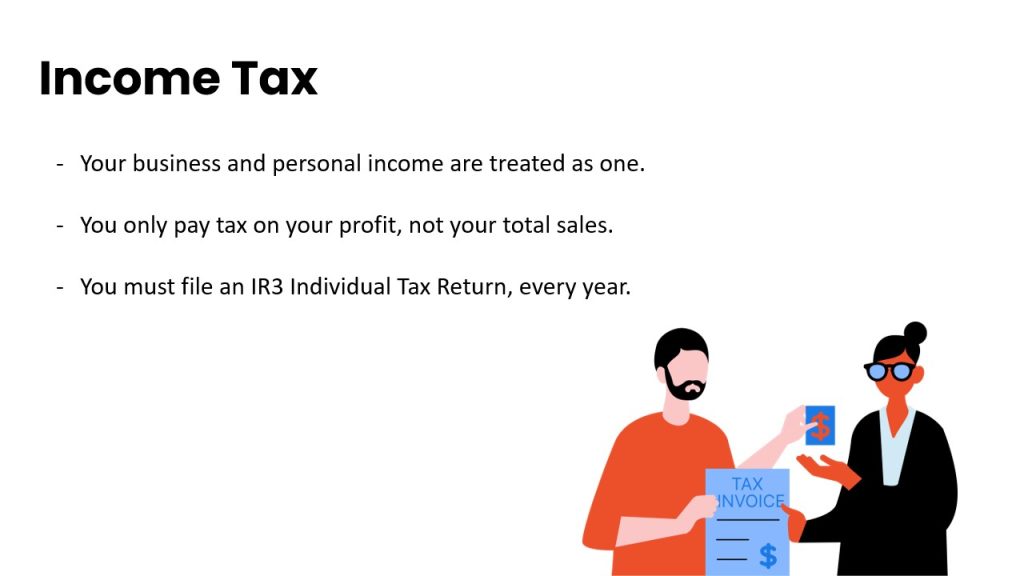
As a sole trader, your business income and personal income are treated as one. The IRD combines everything – self-employment earnings, any PAYE income if you also work as an employee, rental income, investment income – and calculates tax on the total.
Crucially, you only pay tax on your profit, not your total revenue. Profit is simply income minus legitimate business expenses. The tax rate then follows the same sliding scale as PAYE: 10.5% on the first $15,600, rising to 39% on income above $180,000.
Two things sole traders commonly get wrong. First, thinking you can skip filing an IR3 because you only traded briefly or did not make a profit. You still need to file.
Second, assuming your first year of self-employment means no tax is due at all. You may still owe terminal tax.
Provisional tax
Provisional tax is income tax paid in advance, based on what you earned the year before. Most new sole traders have never heard of it – until they suddenly owe it.
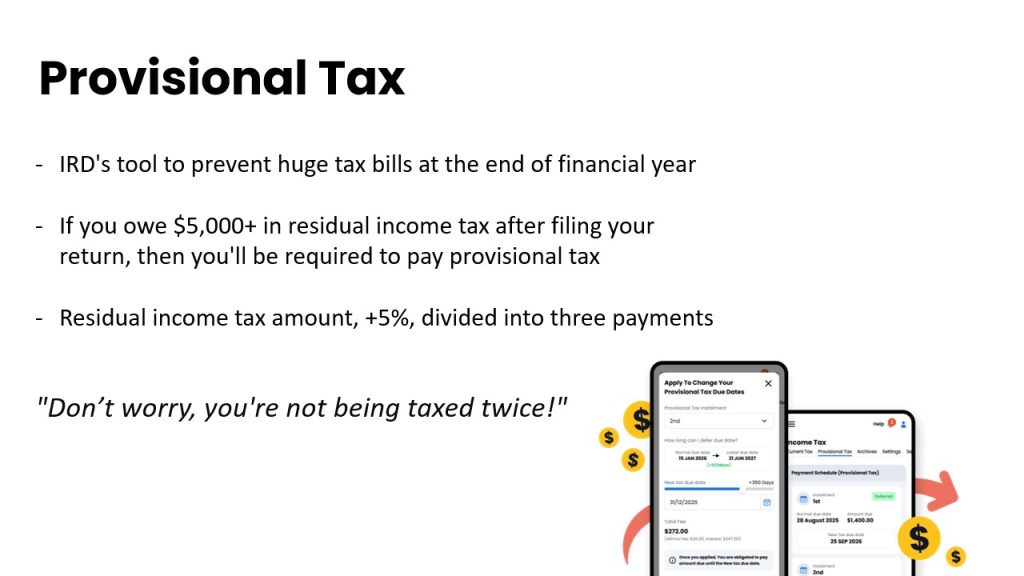
Not everyone pays provisional tax. You only enter the provisional tax system if your residual income tax for the previous year was more than $5,000. It usually kicks in from your second year of trading, because IRD needs your first year’s results to calculate it.
How it works: IRD takes last year’s tax bill, adds a 5% uplift, and splits the result into three payments across the year – 28 August, 15 January and 7 May. Instead of one large bill at year end, you chip away at it throughout the year.
The reason it catches people off guard is timing. In your first year you pay no provisional tax.
But in your second year, you can end up paying last year’s terminal tax and this year’s provisional tax instalments simultaneously. If you are not prepared for that, it can be a significant cash flow hit.
GST
GST is a 15% tax added to most goods and services sold in New Zealand. If you are registered for GST, you collect it from your customers and pass it on to IRD. In return, you can claim back the GST you pay on business expenses.
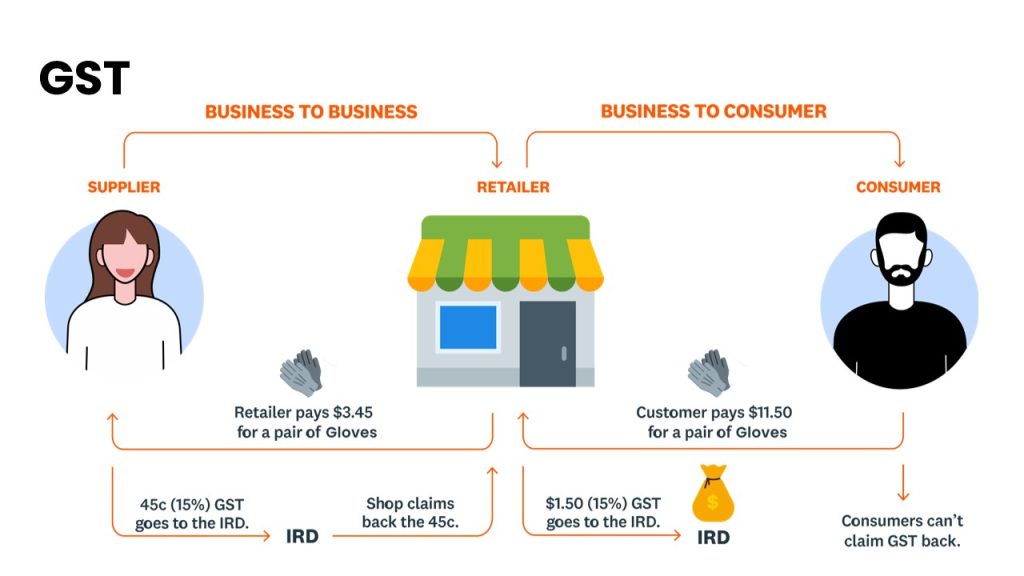
A GST return calculates the difference between the GST you collected on sales and the GST you paid on expenses. If you paid more GST on expenses than you collected on sales, you receive a refund. If you collected more than you paid, you owe the difference to IRD.
Do I need to be GST registered?
When do you need to register? If your self-employed income reaches $60,000 in any 12-month period – not just a single financial year, but any rolling 12 months – registration becomes compulsory. You do not need to be registered as a company or have an NZBN number to register for GST.
If you earn less than $60,000, registration is optional. The main benefit of registering voluntarily is the ability to claim GST back on business purchases. The trade-off is the extra compliance – you need to file returns regularly and keep accurate records. Whether it is worth it depends on your business.
One common misconception: registering as a sole trader, filing a tax return, or getting an NZBN does not automatically register you for GST. They are separate processes.
What can you deduct?
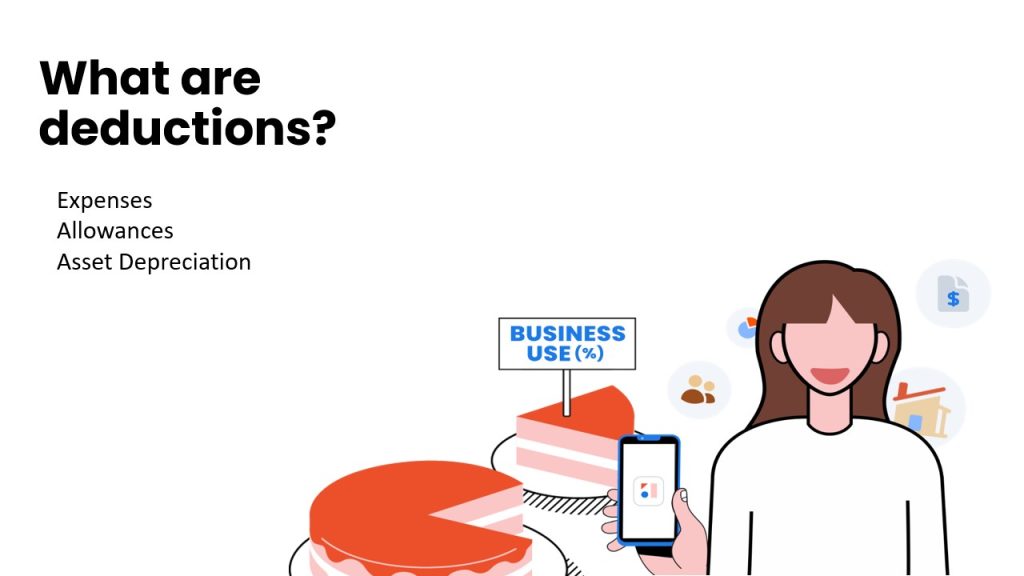
Deductions reduce your taxable profit.
There are three main types: expenses, allowances and asset depreciation.
1. Expenses
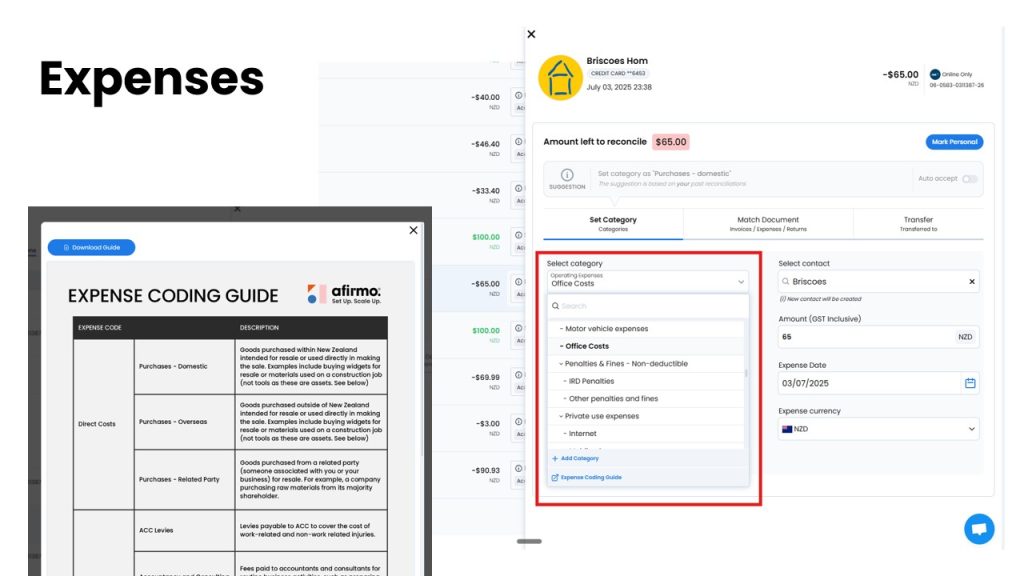
Expenses are the everyday running costs of your business – anything you spend to get the job done. IRD allows these to be claimed as tax deductions, but only if they are genuinely business-related.
Examples include interest on business loans, cost of goods sold, accountancy and legal fees, ACC levies, insurance premiums, rent, repairs and maintenance, business travel, raw materials, software subscriptions, and marketing costs.
2. Allowances
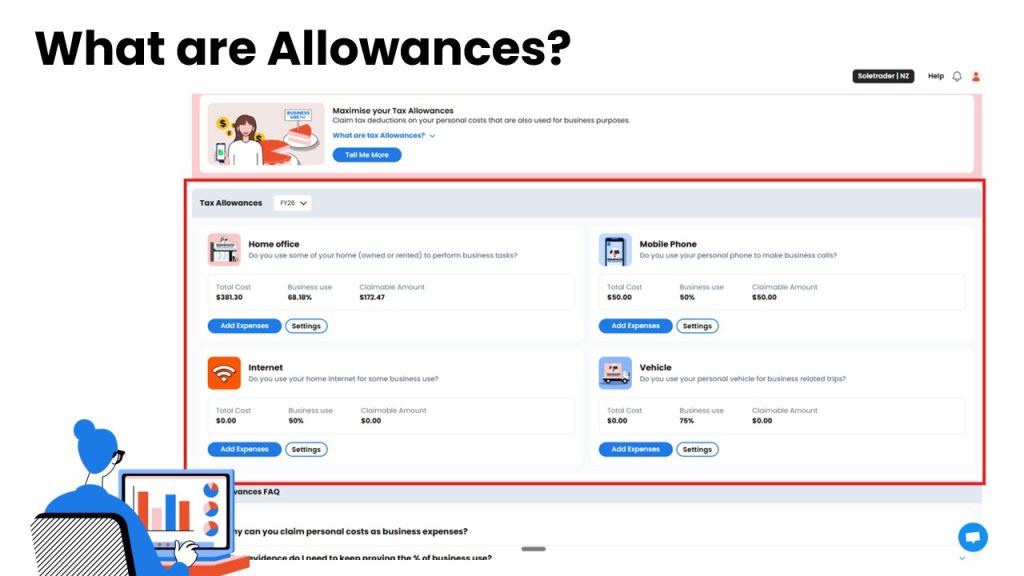
Allowances cover personal costs that are also used for business. The most common ones are your home office, mobile phone, home internet and personal vehicle.
For example, if your home office takes up 10% of your home’s floor space and is used solely for work, you can claim 10% of your home running costs. If you use your personal car 70% of the time for business, 70% of vehicle-related expenses are claimable. IRD provides a simplified option for home offices – a flat rate per square metre – to save you tracking every individual utility bill.
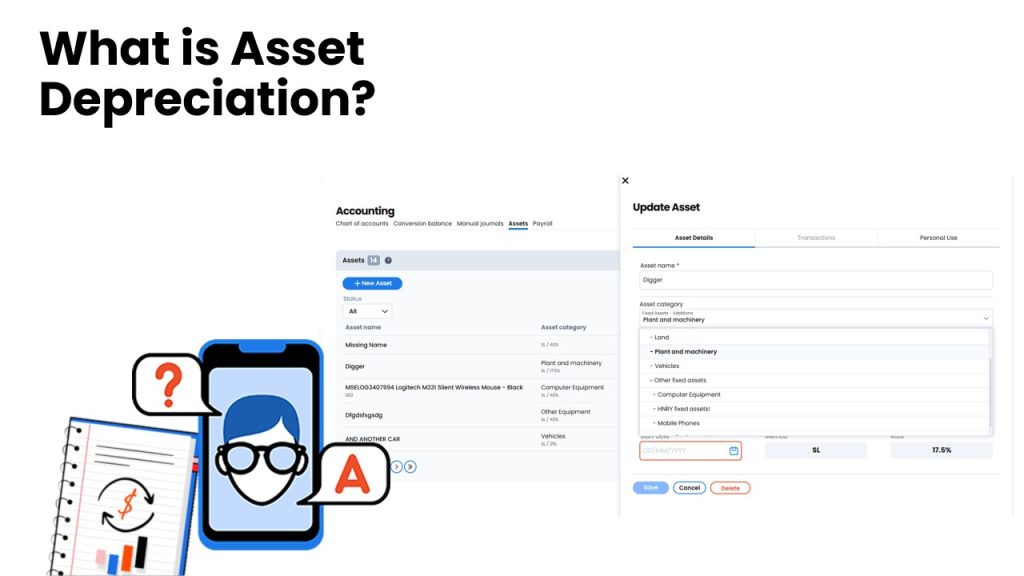
3. Asset depreciation
Asset depreciation applies when your business buys a fixed asset worth more than $1,000. You cannot claim the full cost in the year of purchase. Instead, you claim the gradual loss in value of that asset over time, using depreciation rates set by IRD.
Physical assets like computers, tools, vehicles and office furniture can all be depreciated. Certain intangible assets with a fixed useful life – such as a copyright or patent – can be too. Depreciation reduces your taxable profit each year, which means less income tax. Keep a fixed asset register recording all purchases, disposals, depreciation claimed and current book values. Those records need to be kept for seven years.
Tax liability
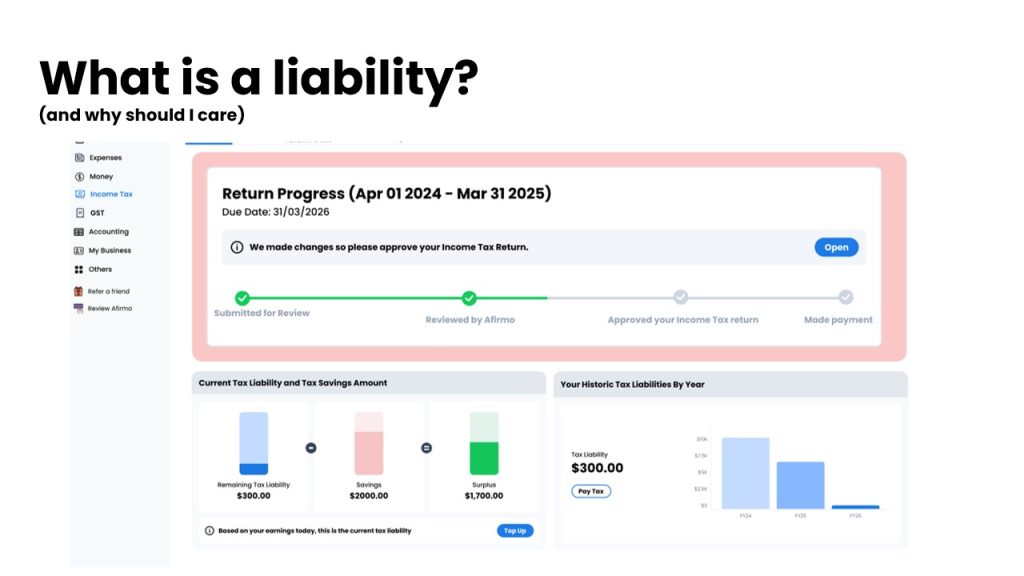
Your tax liability is the amount you owe to the government based on the income you earn and the transactions you make.
It builds up in real time throughout the year – not just when you file your return. Income tax, GST, provisional tax instalments – these all accumulate as your business earns money.
Understanding your liability as it builds – rather than discovering it at year end – puts you in control. You can manage cash flow better, avoid surprises, and make smarter decisions about when to spend and when to hold back.
Where to go from here
Getting across these basics early makes a real difference to how confidently you run your business. Tax does not have to be something you deal with in a panic at year end – with the right setup, it becomes routine.
If you want to go deeper, our Small Business Guide to Tax covers business structures, the main taxes and levies, record-keeping requirements, registration, payment due dates and how to get money out of your company.
And if you want to talk through your specific situation, the Afirmo team offers free 1-on-1 calls with tailored advice for your business.